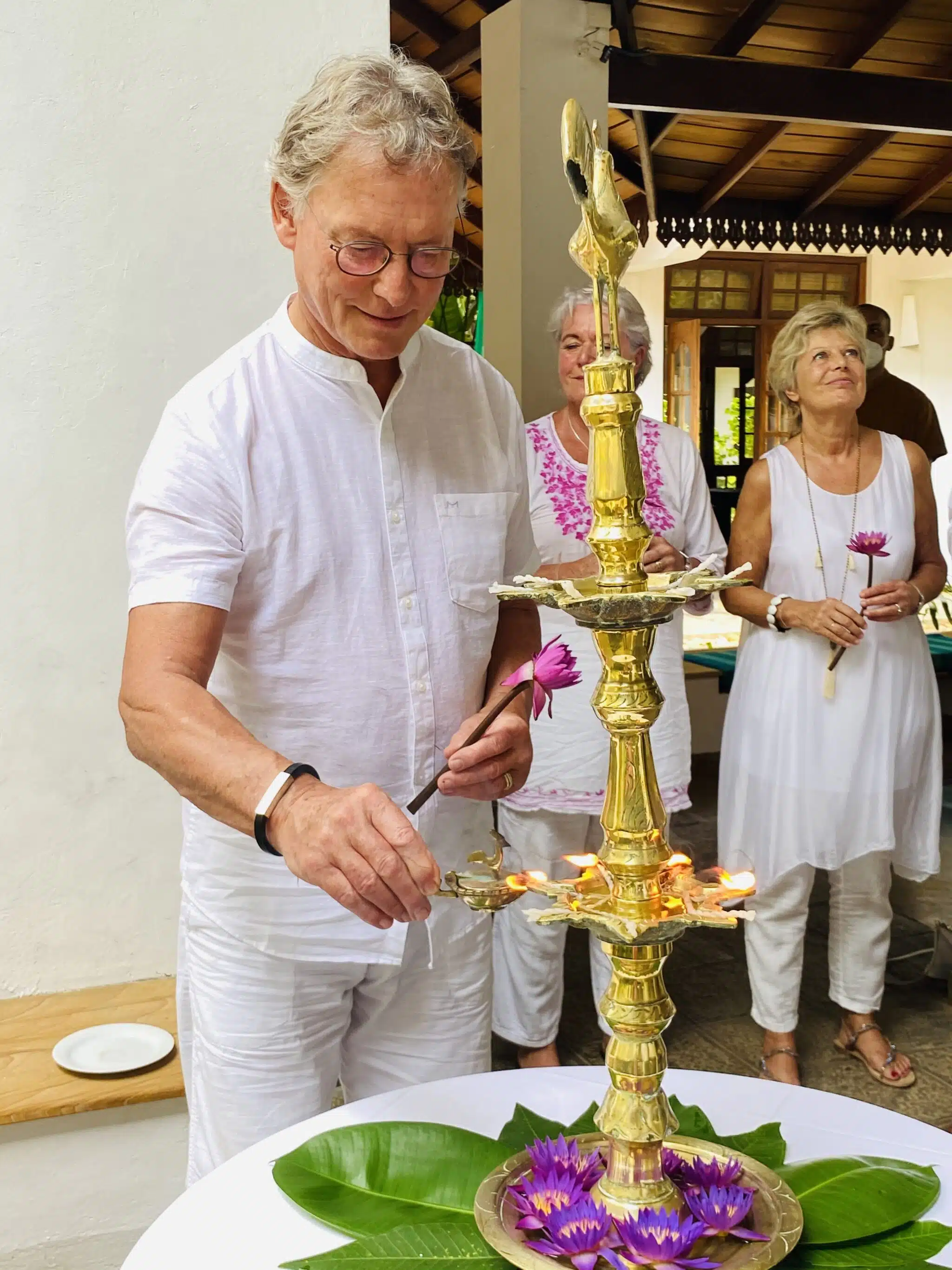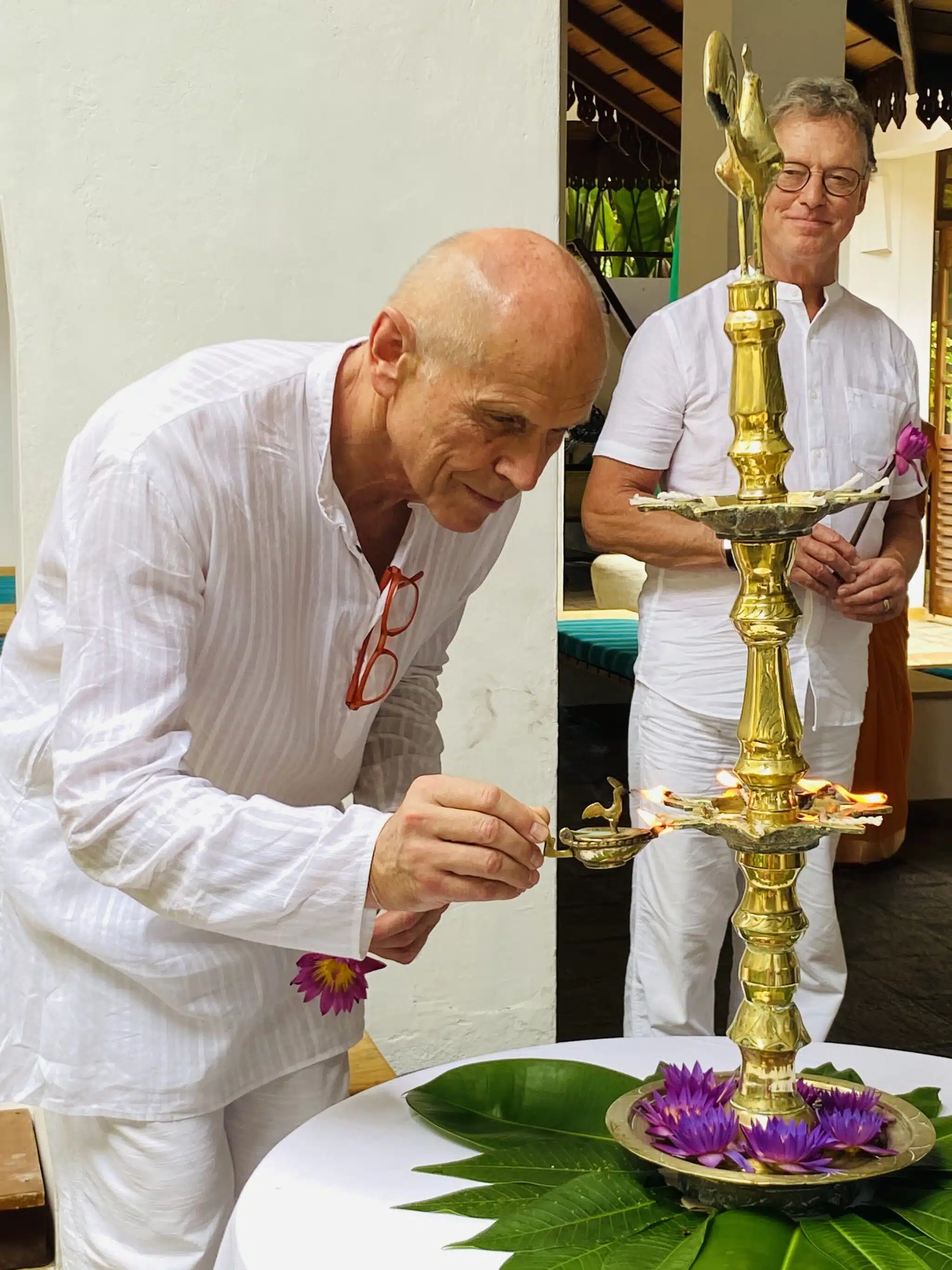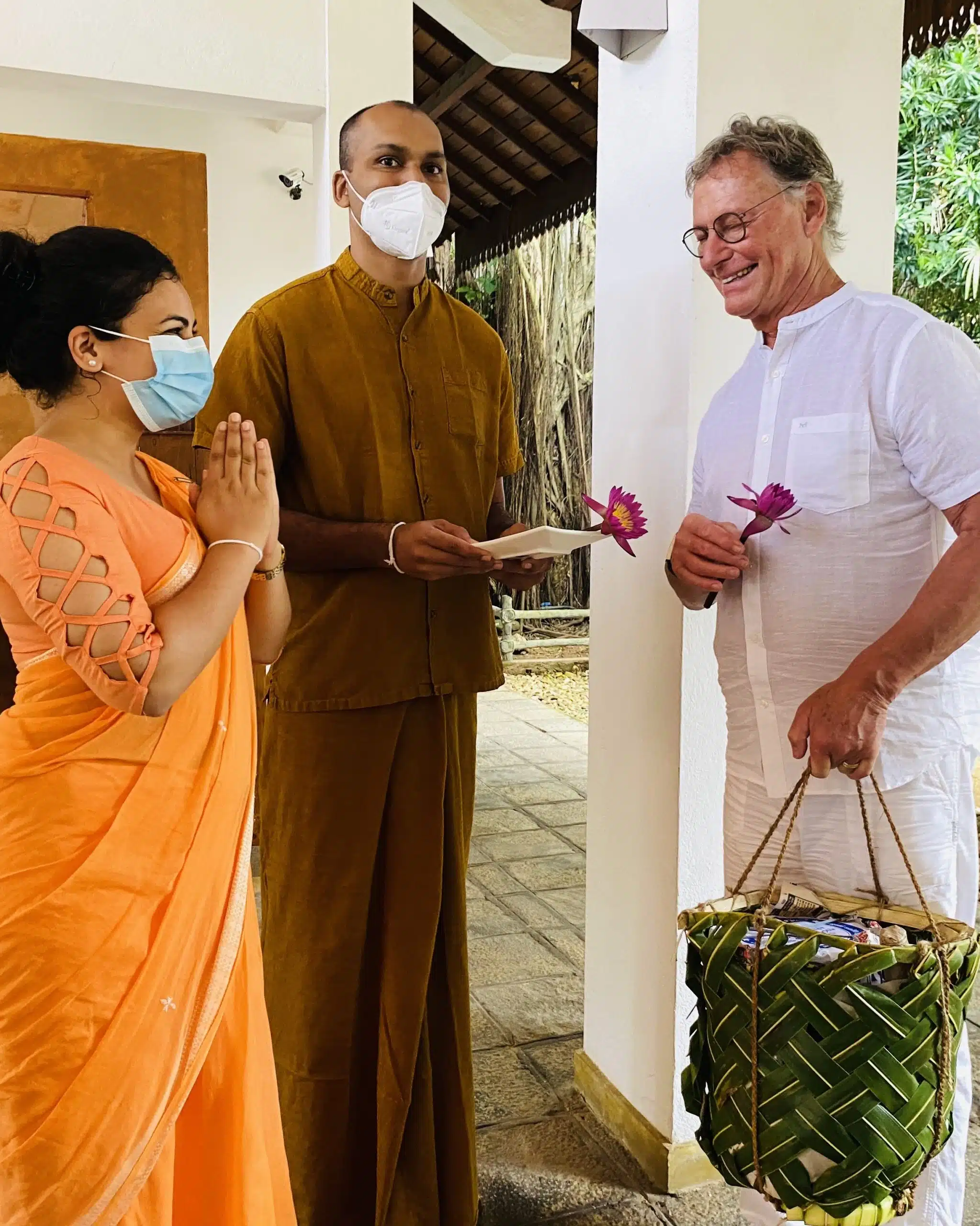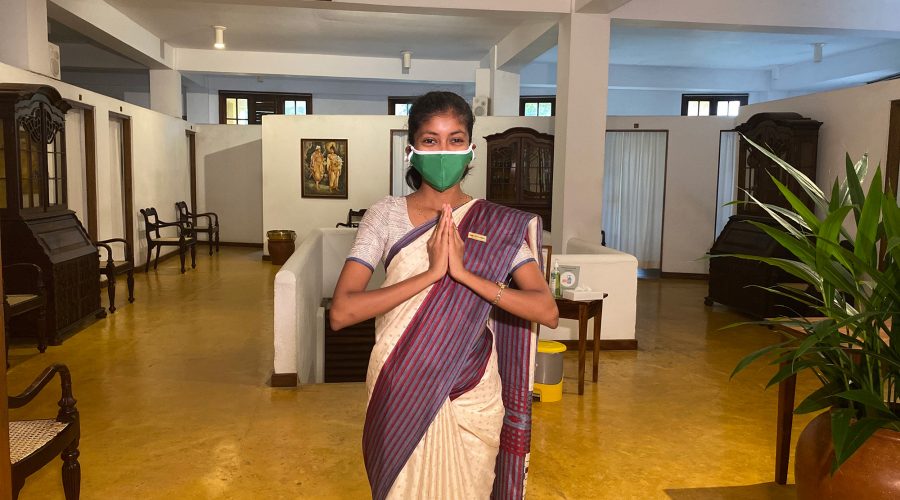
There is a question guests ask at Barberyn on their last morning. They look different by then. Something has settled in them. A loosening. A quiet they did not arrive with.
How do I keep feeling this way when I go home?
The answer Ayurveda has given for thousands of years is not a supplement or a treatment. It is the way you structure your day. Dinacharya, from the Sanskrit words for day and conduct, is the framework of daily practices that keeps the body in rhythm with itself and with nature. It is one of the oldest and most complete systems of preventive health in the world, and it is the part of Ayurveda that most people do not know about until they experience it.
Healing comes from within
Before anything else, this is the principle that underpins everything in Ayurveda. The treatments, the herbs, the therapies, none of these heal you. They create the conditions in which your body can heal itself. That capacity is already there. It never left. What dinacharya does is remove the obstacles that have been quietly blocking it.
This is why our physicians at Barberyn do not only prescribe treatments. They look at how you are living. What time you wake up. Whether your digestion is working well. Whether you are sleeping deeply or just lying in bed exhausted. Whether stress has become so familiar that it no longer feels like stress.
The treatments we offer are powerful. But they work best in a body that is already beginning to move toward balance. The daily routine is what holds everything in place. It is the foundation that everything else rests on.
Modern research is beginning to confirm what Ayurvedic physicians have understood for centuries. Studies now show a profound alignment between Ayurvedic daily practice and modern circadian science, with the body’s natural hormonal fluctuations, metabolic cycles and neurological states corresponding directly to the traditional cycles described in the classical texts. Research on lifestyle changes has shown that comprehensive shifts in daily habits can not only prevent disease but in some cases reverse the progression of conditions including diabetes and heart disease.¹
This is not new information to Ayurveda. It is simply the rest of the world catching up.
The morning belongs to you
At Barberyn, the day begins before the demands of the world begin. This is deliberate. The early morning hours are considered in Ayurveda to be the clearest and most receptive part of the whole day, a time when the mind is still quiet and the body is most ready to be cleansed and prepared.

We encourage guests to wake early and to spend the first part of the morning in silence. Not silence as the absence of noise, but silence as a practice. Sitting quietly. Breathing with intention. Meditating, even for just a few minutes. This is one of the most protective things you can do for your nervous system, particularly in a life that is otherwise full of noise and demand.
The morning practices then begin. Cleaning the teeth with care. Scraping the tongue, which removes the overnight accumulation of metabolic waste and is one of the most direct ways to support your digestion every single morning. Gargling, to strengthen and protect the tissues of the throat and mouth. These are not merely hygiene habits in Ayurveda. They are the first act of caring for the body before the day asks anything of it.
After this, drink a glass or two of warm water. Simple and easy to bring home. Warm water gently activates digestion, supports the elimination of overnight waste and begins the process of clearing the body before anything else enters it. It costs nothing and takes thirty seconds. Do not skip it.
Then movement. Yoga, pranayama, a walk along the beach. And wherever there is sun, step into it. Sunlight in the early morning is genuinely medicine. It anchors the body’s internal clock, supports hormonal balance and lifts the mood in ways that no artificial light can replicate.
Oil and the nervous system
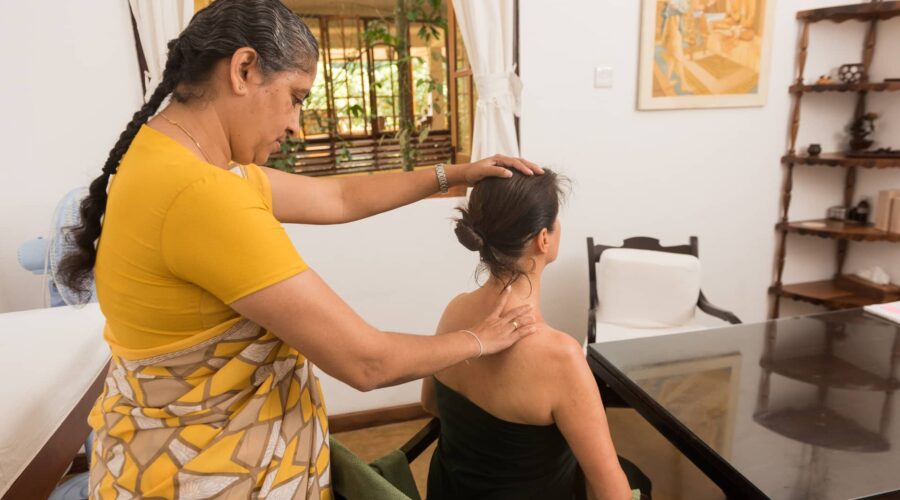
Self-oil application, known as abhyanga, is one of the most celebrated practices in the classical Ayurvedic texts. Warm oil applied to the body calms Vata, supports circulation, nourishes the skin and brings the nervous system into a state of genuine quiet. Research shows that therapeutic oil massage, whether on the head or the feet, stimulates thousands of nerve endings, supports autonomic balance, reduces sympathetic overactivity and helps facilitate the hormonal conditions needed for deep sleep.²
What many guests discover at Barberyn is what it feels like to be truly cared for in this way. There is a sense of being completely held, of deep relaxation, of the body finally letting go of things it has been carrying for a long time. Guests often describe it as a reset. A feeling of being refreshed at a level that goes beyond the physical. That is not incidental. It is the result of treatments that work with the whole person, not just the presenting complaint.

At home, you have your own hands, and that matters more than most people realise. A full self-massage before your morning shower is ideal. But if your mornings are genuinely pressed for time, do this at the very least. A few drops of warm oil on the crown of the head, on the palms and on the soles of the feet, gently massaged in for just a few minutes, is enough to begin shifting the nervous system. Even this small act, done daily and with consistency, accumulates into something meaningful over time.
Two drops of oil applied to the nostrils is another practice worth building into the morning when you are ready for it. In Ayurveda the nose is considered the gateway to the mind, and this simple act, known as nasya, is understood to support mental clarity, the health of the respiratory passages and the overall balance of Vata in the upper body. Ask your physician at Barberyn which oil is right for you before you begin.
Oiling the navel is something else the physicians often recommend, a few drops before sleep whenever you are able to. It is a quiet, grounding practice that takes almost no time and that many guests find becomes one of the most natural parts of their evening.
Please speak with your physician before you leave. They will advise you on which practices and which oils are right for you specifically, based on your constitution and what you are working on. The oils that suit one person may not suit another, and this is not an area where general advice serves you as well as a personal recommendation.
Food that works for you, not against you
Ayurveda is very specific about food combinations. There are foods that are perfectly fine individually but become incompatible when eaten together, and over time this creates a buildup of undigested matter that sits at the root of most chronic health complaints. Warm, freshly cooked food eaten at the right time of day is one of the most powerful things you can do to support everything else in your routine.
At Barberyn, a physician is present at the restaurant to guide guests through their meals. This is not something you find in many places, and guests often find it quietly transformative to have that level of support around something as fundamental as eating. Before you leave, your physician will also sit with you and go through the food guidelines that are most relevant to your constitution. Please use that conversation fully. It is some of the most practical guidance they offer, and it is the kind of knowledge that continues to serve you long after your stay.

Being in nature is not optional
One of the things we notice most in guests who arrive having lived at a relentless pace for a long time is that they have stopped being outside without a purpose. They move from one interior to another. They have not simply sat near the sea, or just looked at the sky, in months.
Ayurveda has always understood that human beings are part of nature. Disconnection from natural rhythms is itself a source of imbalance. The light, the ocean, the sound of the natural world at Barberyn, these are not incidental to the experience. They are part of the medicine.

You can carry this home. Even in a city, there is usually a park, a courtyard, a few minutes of morning light if you step outside early enough. Protect that time.
Sleep as seriously as anything else
Ayurveda regards sleep as one of the three pillars of health, alongside food and a well-lived life. Ideally, being in bed by ten in the evening allows the body to align fully with its natural repair cycle. If that feels out of reach given how your life is currently structured, work toward it gradually. But midnight is the outer limit. Beyond that, the quality of rest changes in ways that accumulate over time and that no amount of sleep the next morning fully compensates for.
Studies consistently show that people who wake earlier report better health status, lower stress levels and more favourable activity patterns overall.³ The science here simply confirms what the classical texts have always said.
The evening routine matters as much as the morning one. Winding down slowly, away from screens, eating the last meal well before sleep, allowing the nervous system to settle. These are the conditions that make deep, restoring sleep possible, the kind that actually repairs and integrates.
The routine changes with the season
Ayurveda does not treat the year as uniform. The practices and foods that serve you well in one season may actively work against you in another. This is the framework of ritu charya, the seasonal regimen, and it is an essential part of maintaining health across a lifetime rather than only recovering it during a stay.
Your physician at Barberyn can guide you on how your routine should shift as the seasons change. This is one of the conversations that guests who return year after year consistently find most valuable.
Bringing it home
You do not need to recreate everything you experienced here and you do not need to begin everything at once. Start with one or two practices that feel natural to you. Warm water after brushing your teeth in the morning. A few minutes of silence before the day begins. A little oil on the crown of the head, the palms and the feet. Going to bed an hour earlier than you currently do. Let those settle into your life before you add more. A routine built slowly and kept consistently does far more good than a perfect programme abandoned after two weeks.
Over time, these small acts compound. The nervous system begins to trust the rhythm. Digestion improves. Sleep deepens. The noise inside quiets down. This is not a dramatic transformation. It is a gradual return to how the body was always meant to function.

Speak with your physician before you leave Barberyn. They will help you identify exactly what to take home and how to make it work in your actual life. That conversation, unhurried and specific to you, is one of the most useful things we can offer.
The daily routine is not a burden. Done consistently and with some understanding of why it works, it becomes the most reliable source of energy, clarity and resilience you have. It is Ayurveda lived rather than received. Healing was always available to you. The routine simply clears the path to it.
That is what we hope you leave with.
References
¹ Rao, N. et al. “Ayurveda daily regimen practices (Dinacharya): a scientific system model approach suitable as a quaternary prevention strategy for non-communicable diseases.” Journal of Public Health and Emergency, 2022.
² Rao, P. et al. “Integrating circadian rhythm alignment with Ayurvedic Dinacharya: the role of Padaabhyanga and adaptogenic herbs in sleep and stress management.” International Journal of Creative Research Thoughts, 2026.
³ Putilov, A.A. “Association of morning and evening lateness with self-scored health.” Biological Rhythm Research, 2008. Also: Olds, T.S. et al. “Sleep duration or bedtime? Exploring the relationship between sleep habits and weight status and activity patterns.” Sleep, 2011.